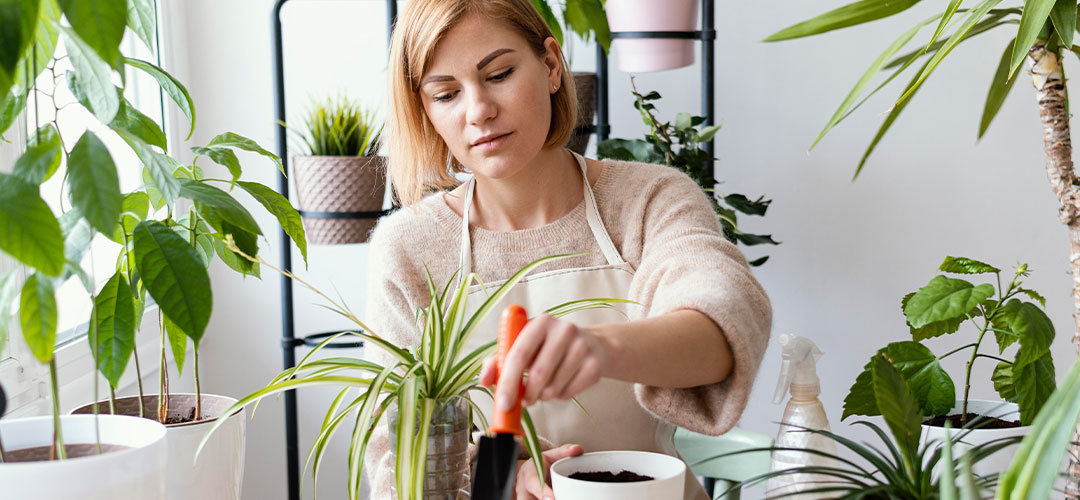
Whether it's a tiny succulent on your desk, herbs on the kitchen windowsill or a monstera that's gradually taking over the living room, houseplants have become a familiar feature in our homes.
But our love of indoor plants may be about more than making a room look good. Growing research into houseplants and wellbeing suggests that surrounding ourselves with greenery may have some interesting benefits for how we feel.
They won't transform your health overnight, and some of the claims made about indoor plants have been considerably exaggerated, but bringing a little nature indoors could be one surprisingly simple way to make your everyday environment feel better.
Houseplants May Help Us Feel Calmer
There's something inherently relaxing about greenery.
Research into exposure to nature has repeatedly found associations with improved wellbeing and reduced stress. While walking through a forest and putting a spider plant on your desk clearly aren't the same thing, studies have also investigated whether indoor plants can influence how people feel.
Simply seeing greenery may help create an environment that feels calmer and more restorative. This could be particularly welcome if you work from home, spend long periods indoors or live somewhere without easy access to a garden.
There's another potential benefit too: looking after plants can become a small daily ritual. Watering, pruning and checking for new growth provides a few moments when your attention is focused on something away from screens, emails and everyday pressures.
Could Plants Help With Concentration?
If your concentration starts disappearing halfway through the working day, adding some greenery to your workspace might be worth considering.
Studies of workplaces and learning environments have explored links between plants and factors including attention, productivity and perceived wellbeing. The evidence isn't strong enough to suggest that buying a peace lily will suddenly turn you into a productivity machine, but our physical surroundings can influence how comfortable and engaged we feel.
A pleasant workspace may also encourage you to spend time there without it feeling quite so clinical. And unlike another cup of coffee, your houseplant isn't going to interfere with tonight's sleep.
Bringing Nature Indoors
Many of us spend a considerable amount of our lives inside, particularly during the British winter.
Shorter days, poor weather and working indoors can mean our contact with the natural world decreases considerably between autumn and spring.
Houseplants offer a simple way to introduce natural elements into our homes throughout the year. This idea is sometimes linked with biophilic design, an approach to buildings and interiors that aims to strengthen our connection with nature through plants, natural materials, daylight and views of the outdoors.
You don't need to redesign your house to benefit from the principle. A few plants near the places where you spend most of your time can make a room feel warmer, more welcoming and connected to the outdoors.

Do Houseplants Really Clean the Air?
This is probably the most famous health claim surrounding houseplants, and it needs some context.
You may have heard that certain houseplants can remove toxins from indoor air. This idea largely stems from laboratory research, including well-known NASA experiments examining plants' ability to remove certain chemicals from sealed environments.
Plants can indeed absorb some substances under controlled conditions. However, a normal home is very different from a sealed laboratory chamber.
Research suggests you'd need an unrealistic number of plants to achieve the kind of air-cleaning effect sometimes promised online. In everyday homes, good ventilation is considerably more important for indoor air quality.
So enjoy your plants for the many reasons they're worth having, just don't expect one aloe vera on the windowsill to replace opening a window.
Caring for Something Can Feel Rewarding
One of the less obvious benefits of indoor plants may come from caring for them. Watching a plant produce a new leaf or finally seeing something flower after months of attention can provide a genuine sense of satisfaction.
Gardening has long been associated with wellbeing, and houseplants offer a miniature version that's accessible even if you don't have a garden.
There's also something reassuringly slow about growing plants. In a world of instant notifications and next-day delivery, plants operate entirely on their own schedule. You can't hurry a new leaf along by refreshing it every five minutes.
That slower pace can be a refreshing contrast to the rest of modern life.
Houseplants May Make Your Home Feel Better
Wellbeing isn't solely about diet and exercise. The environment in which you spend your time matters too.
A home that feels comfortable and inviting can make it easier to relax. Plants can soften a room, introduce colour and create visual interest without requiring major changes to your décor.
This can be particularly valuable in home offices, bedrooms and living spaces where you spend significant amounts of time.
Plants may also slightly increase humidity as water evaporates from their leaves and soil, although the effect in a typical home is generally modest.
They Can Encourage Other Healthy Habits
Interestingly, introducing plants into your home can sometimes lead to other small lifestyle changes.
Keeping herbs on a windowsill might encourage you to cook with fresh ingredients. Looking after indoor plants could spark an interest in gardening. A growing appreciation of nature might encourage you to spend more time walking outdoors.
None of these things happens automatically, of course. But healthy living often develops through clusters of small habits rather than one dramatic lifestyle overhaul.
Which Houseplants Are Easy to Look After?
If you've previously managed to kill every plant you've owned, don't assume indoor gardening isn't for you. Some houseplants are surprisingly forgiving, even if you don't consider yourself particularly green-fingered. Spider plants, peace lilies, aloe vera, rubber plants and snake plants (also known as mother-in-law's tongue) are all widely available choices. The key is choosing a plant suited to the amount of light in your home and being realistic about how often you'll remember to water it. Before buying a plant, consider how much natural light your room receives and how frequently you're realistically going to remember to water it. A plant suited to your home is much more likely to thrive than one chosen purely because it looked good on Instagram.
It's also important to check whether a particular plant is suitable if you have young children or pets. Some common houseplants can be toxic if eaten by cats, dogs or humans.
You Don't Need to Create an Indoor Jungle
If social media is anything to go by, owning houseplants apparently requires turning your living room into the Amazon rainforest. It doesn't.
One or two carefully chosen plants can introduce greenery into a room without creating another demanding hobby. Start with something easy, learn what conditions it prefers and see whether you enjoy looking after it. If you do, there's always room for another. Probably.
A Small Dose of Everyday Nature
Houseplants aren't a miracle health intervention. They can't compensate for poor sleep, inactivity, an unbalanced diet or chronic stress, and claims about their ability to dramatically purify indoor air should be treated with caution.
But the health and wellbeing benefits of houseplants don't need to be dramatic to be worthwhile.
Plants can make our surroundings more pleasant, give us something to nurture and bring a little of the natural world into places where we spend much of our lives.
And during the darker months, when the garden isn't particularly inviting and getting outdoors can feel considerably less appealing, having a little greenery inside might be more valuable than we realise.
Disclaimer:
Information and other content provided in Lily & Loaf blogs should not be construed as medical advice and should not be considered a substitute for professional medical expertise. If you have any medical concerns, you should consult with your health care provider.